“ Everything in this issue is a question of how much water. A honey keeps because it is a supersaturated solution in which too little free water remains for yeasts to work; the European directive draws the line at twenty per cent, with a little room for certain honeys, and that figure is only the legal transcription of a physical fact. The bees reached the same conclusion first, and seal the cell when they judge it dry enough. Around that line stand an experiment in which bees learned to tell photographs of human faces apart, the bench-testing of acacia honey, and the second episode of a tree that travels under a name not its own. Four pieces and a word, opercule, on the lid and on the threshold. ”
— The Conservateur
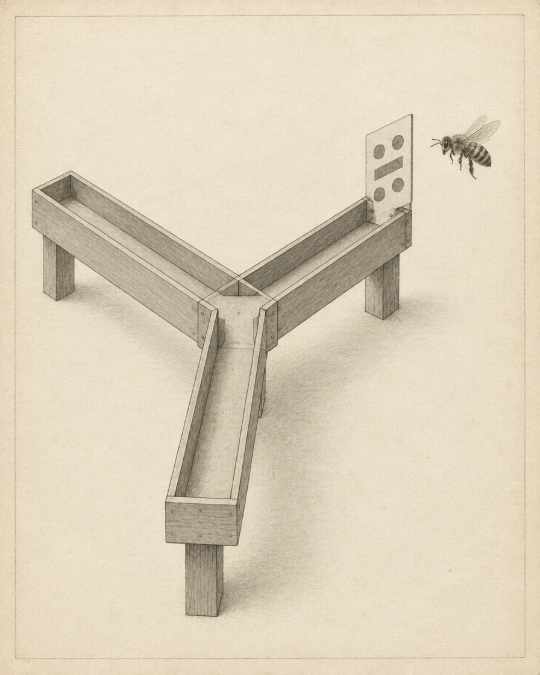
In 2005, Adrian Dyer, Christa Neumeyer and Lars Chittka trained honeybees on photographs of human faces, rewarding a visit to one and not to another. The bees learned to tell them apart, and held the distinction over days.
What the experiment demonstrates is configural processing: the insect treats the arrangement of features as a pattern, much as it treats a flower. It does not demonstrate that a bee knows a face for a face, and the authors said as much. The reach of the result is still argued over, which is the interesting part of it. The Cabinet records the experiment and the argument, and not a conclusion that neither supports.
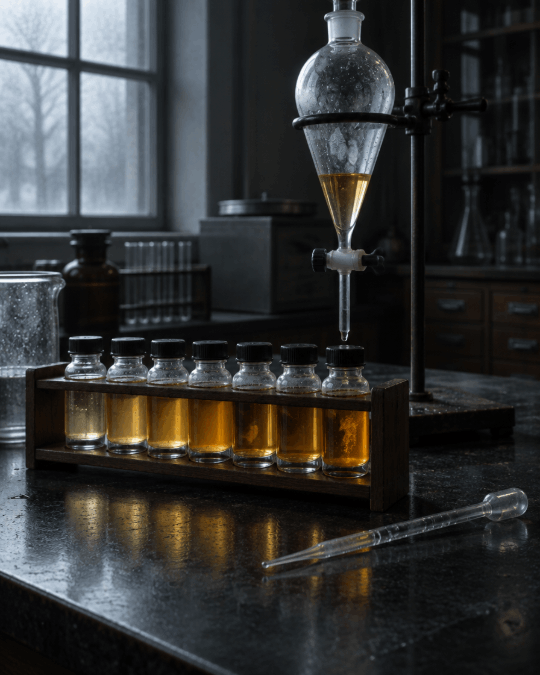
On 16 September a file on the authentication of acacia honey entered the Cabinet's editorial matter, one of six from the week's scientific pass.
The question it treats is the one this issue's serial raises from the other end. A honey sold as acacia comes from the robinia, and a name held that loosely invites substitution: syrup, blending, a botanical origin declared rather than demonstrated. Laboratories answer it by moving past the counting of pollen towards panels of markers, a honey's composition read as a signature rather than as a label.
We file the method. We do not yet vouch for any single result, and we will say which when we do. When the Cabinet buys, it asks what was measured.
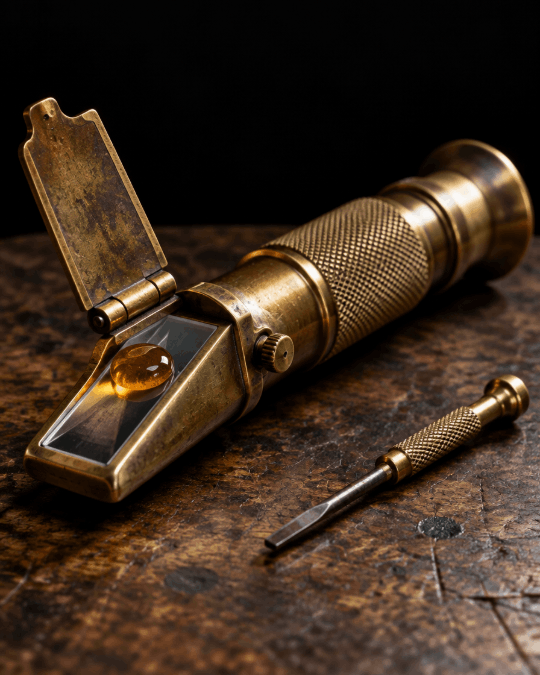
Honey keeps because it is dry. It is a supersaturated sugar solution in which too little free water remains for yeasts to ferment, and the whole of its long conservation rests on that one condition.
European law fixes the line. Directive 2001/110/EC sets the maximum water content of honey placed on the market at twenty per cent, with a higher ceiling of twenty-three for certain honeys, heather among them, whose structure holds its water differently. Past the line, fermentation is not a risk but an expectation.
A legal threshold is rarely so exactly the transcription of a physical one. The bees fixed it first, and seal the cell on the same judgement.
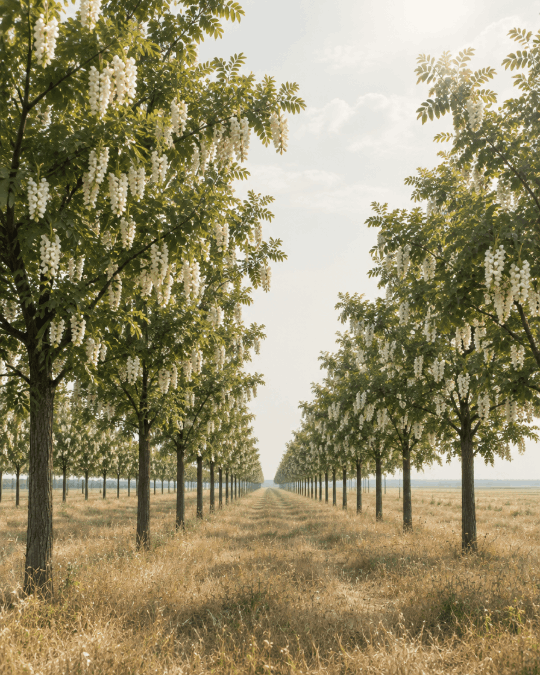
In the first episode, a Virginian tree was set in the ground in Paris in 1601, and a century and a half later the genus took its planter's name.
What followed was a career. Through the eighteenth and nineteenth centuries the robinia was planted across Europe for what it does rather than for what it is: it fixes nitrogen, holds a slope, grows fast on poor ground, and gives a hard timber that resists rot. Hungary took to it more than anywhere else, and its plains carry the largest stands on the continent.
Somewhere in that spread the commercial name slipped. The tree became the acacia, the true acacias being African and Australian and elsewhere, and the honey took the borrowed name with it. It is now among the most traded honeys in Europe, under a word that names a different tree.
Next episode: what a market does with a name.
It names the thin cap of wax the bees lay over a cell once the honey inside is dry enough to keep, and it passes into natural history for any small lid: the plate that closes a snail's shell, the flap over a fish's gills. The gesture the word names is a judgement. The bees do not seal to a schedule; they seal when the water has fallen far enough, and the beekeeper reads that wax lid as a certificate of ripeness. One word for a lid, and for the moment a thing becomes fit to be kept.
 The Honey Factories