“To pass is to cease being what one was without yet knowing what one becomes. This notebook follows four crossings: that of a generation of workers which changes body in order to hold the winter, that of a drop of nectar which changes bearer at the threshold of the comb, that of a drop of sugar which passes from sap to insect and then to bird, and that of a bee which crosses a border no one had drawn for her. Four pieces and a word, to measure what is at stake at the precise moment of passage.”
— The Conservateur
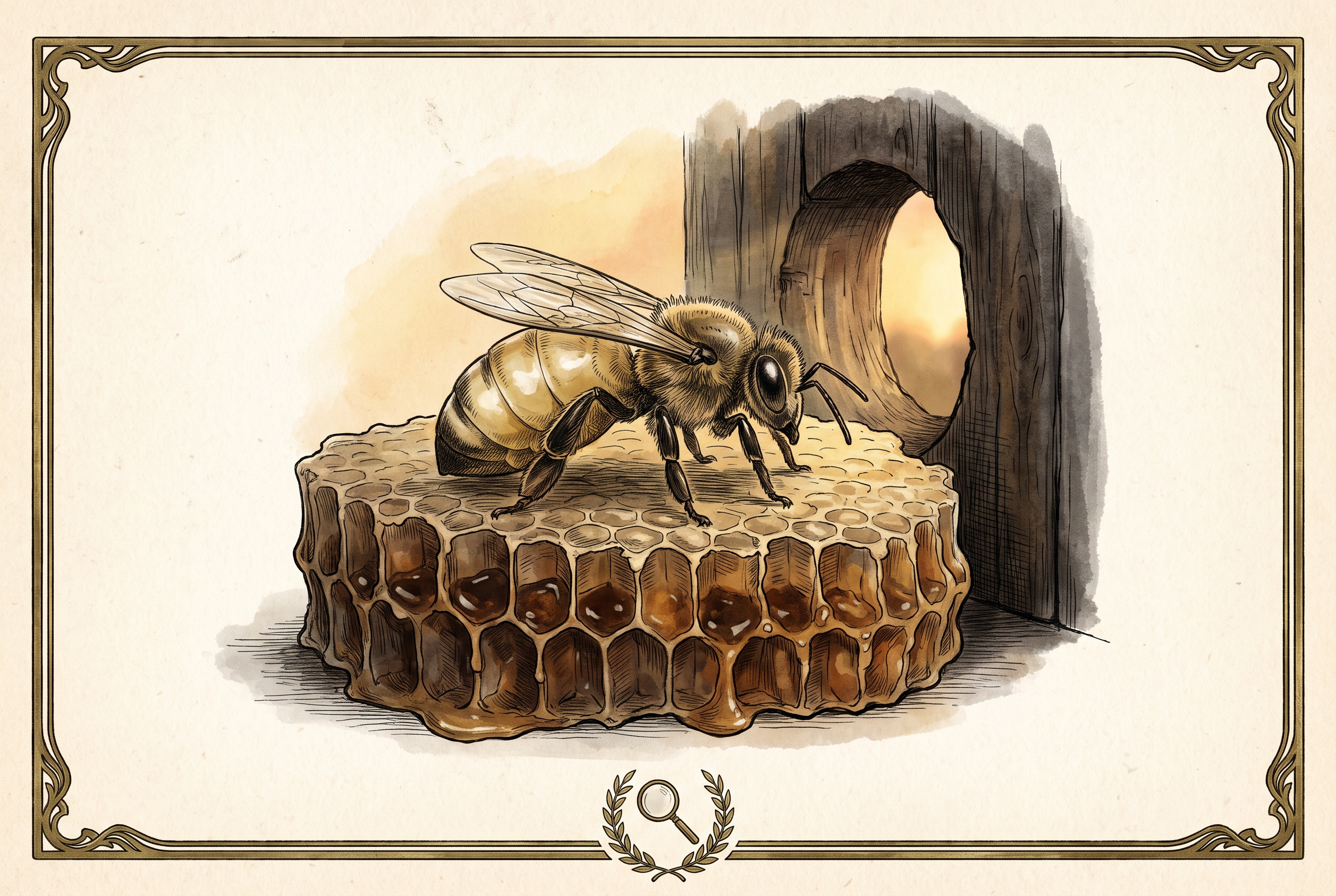
The summer worker lives four to six weeks. The one born at the end of summer lives five to eight months. It is not the same bee, and yet it is the same species, from the same eggs, in the same hive.
The difference rests on a protein, vitellogenin, laid down as a store in the fat body of the winter bee, known as diutinus. That store is built from the end of summer onward, as laying slows and pollen income grows scarce; it serves the bee as a protein reserve, as an immune support proper to the insect, and as a factor of longevity.
The colony therefore does not pass the winter by sleeping: it prepares for it by making, some weeks in advance, a generation of workers built to last. The cold is met not by behaviour alone, but by a different body.
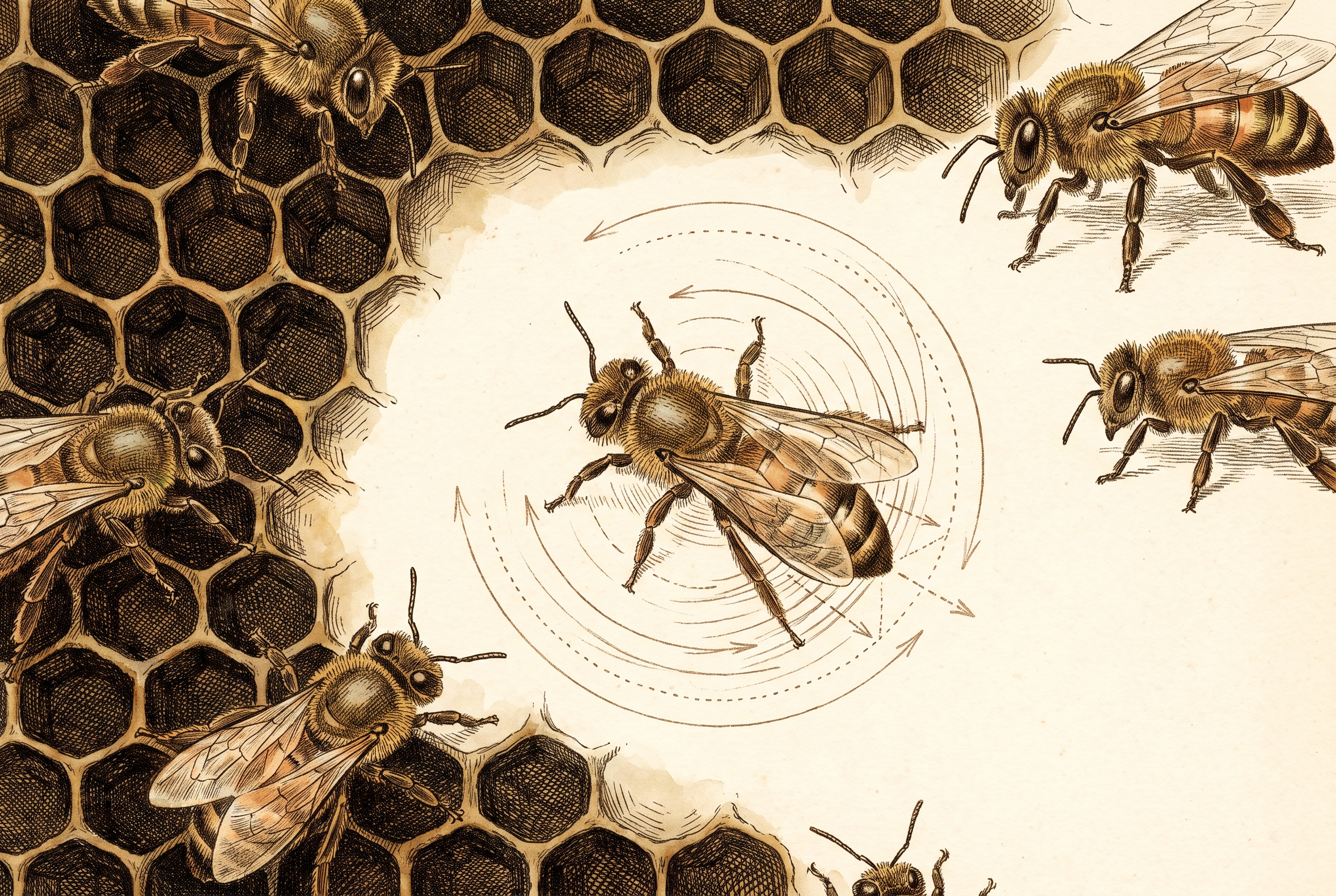
The waggle dance is famous: it says where the nectar is. Another, far less known, says something else entirely.
A forager returning laden looks for a receiver to whom she can hand over her load. If the wait draws out, she begins to tremble, her body shaken by an irregular sideways motion, and moves across the comb in all directions. Karl von Frisch described the behaviour as early as the 1920s; its function remained obscure until the work of Thomas Seeley in 1992.
The signal is an internal adjustment. It reports that the colony is short of nectar receivers: it recruits further workers to that task while, at the same time, damping the dispatch of new foragers. The hive does not merely say where to gather; it can also say that it can no longer process what it gathers.
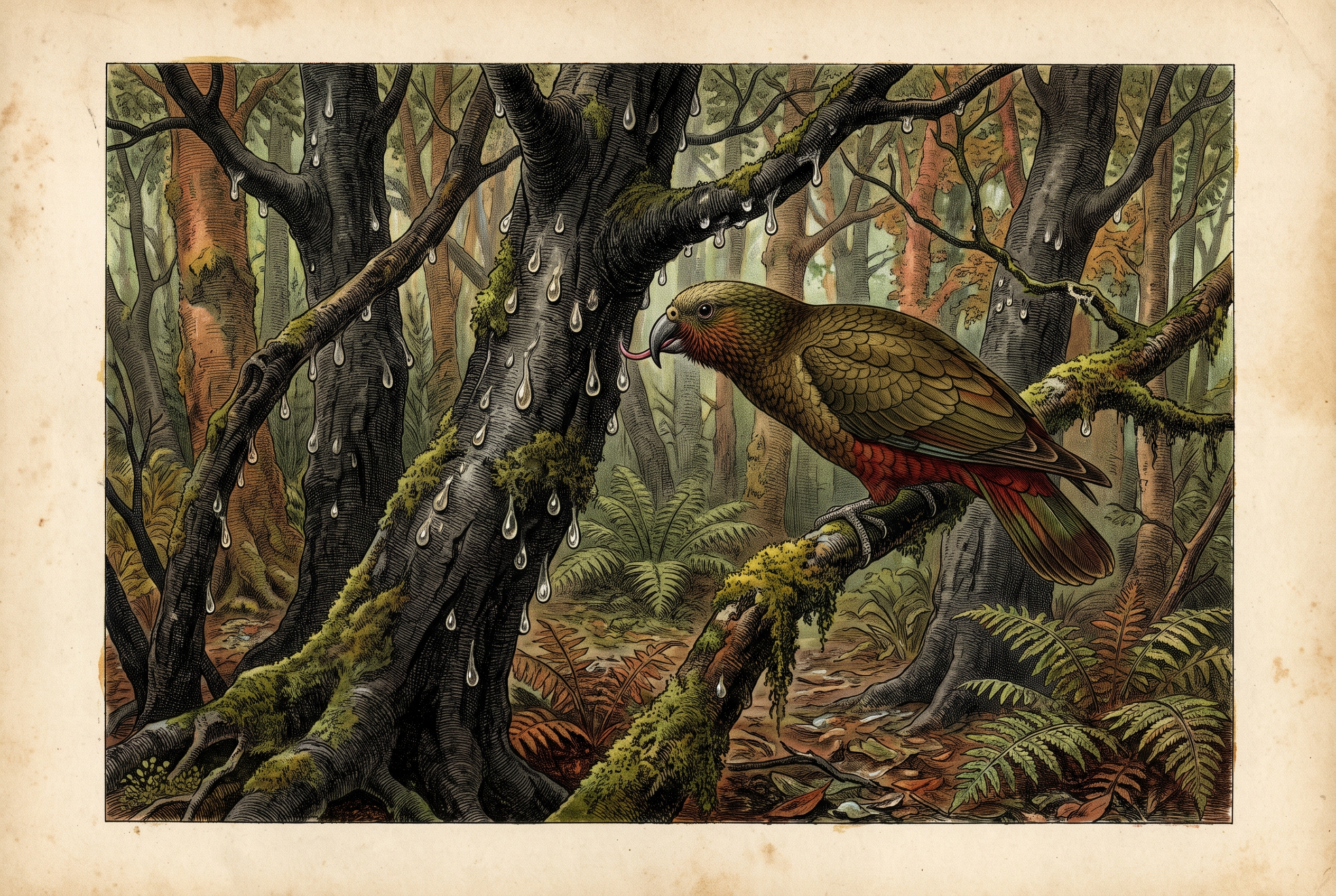
In the southern beech forests (Nothofagus) of New Zealand's South Island, the trunks are blackened with sooty mould and beaded with clear droplets. Those droplets do not come from the tree: they are excreted by a scale insect of the genus Ultracoelostoma, lodged beneath the bark, which filters the sap and discharges the sugary surplus at the end of a long waxy filament.
Bees find in it the matter of a dark honey, full-bodied and mineral, gathered in quantity in certain years. They are not alone at that table: the kaka (Nestor meridionalis), a forest parrot listed as vulnerable, draws a notable share of its diet from this honeydew, particularly ahead of breeding.
The resource is therefore shared, and contested. Where introduced wasps take the honeydew in bulk, the bird finds less of it. A honey, here, cannot be read on its own.
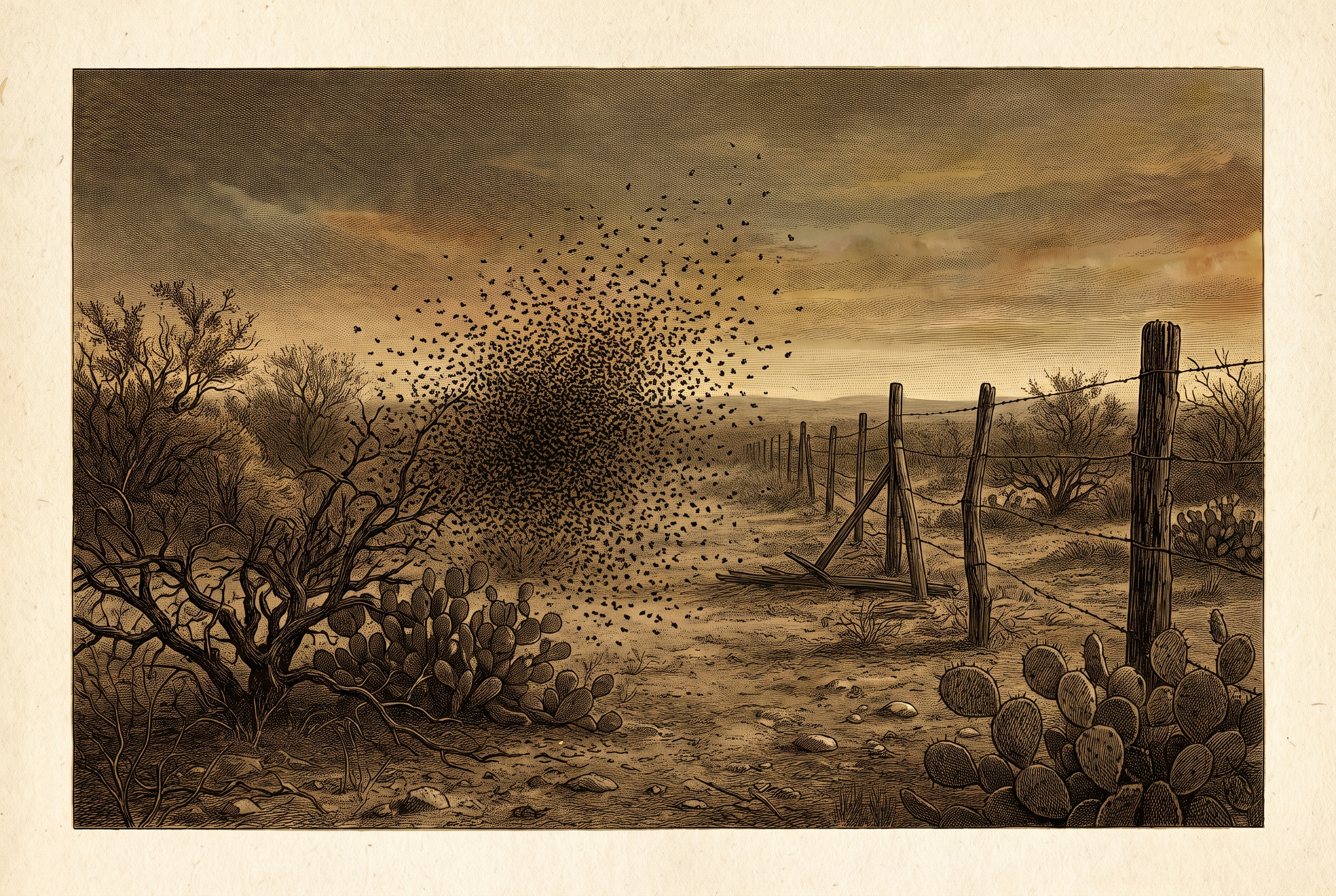
The previous episode left twenty-six hybrid swarms escaped from a Brazilian experimental apiary in 1957. Thirty-three years later, in October 1990, a first swarm of Africanised bees was recorded near Hidalgo, in south Texas. The border of the United States had been crossed.
The American press seized upon the affair under the name killer bees. The reality owes less to cinema than to ethology: these bees defend their nest in greater number, faster and for longer than European lines, which makes incidents graver without making them more frequent.
Meanwhile, to the south, the same bee produced the opposite effect. Hardy, prolific, resistant, it made Brazil one of the world's great producers and exporters of honey. A single line, three accounts according to latitude: laboratory accident, news item, economic resource.
The Latin examen names both the swarm and the tongue of the balance: two kindred senses, from the same verb, neither derived from the other, and from which our word examination descends directly. One and the same word thus names what is driven out of the nest and what is submitted to measure. A colony that swarms does not flee: it divides, and the half that leaves takes the old queen with it.
 The Honey Factories