“Everything here comes back to the moor. In September the ling flowers, last great honey flow of the year, and its honey sets into a jelly that resists the extractor’s spin; in spring the tree heather had already given an amber honey that flows like any other. Between these two Ericaceae stands a whole lesson in reading: a nectar in New Zealand begot its own scales of measure; the varroa serial closes on what the wild teaches; and the house’s atelier has begun to compose in sound. Four pieces and a word, miellée, each an account of a season that ends.”
— The Conservateur
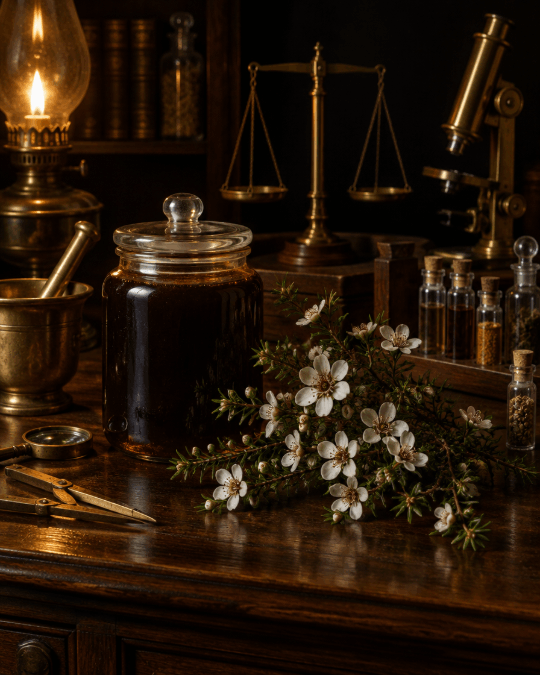
Manuka honey, from the nectar of Leptospermum scoparium in New Zealand, contains methylglyoxal, a compound formed over months from the dihydroxyacetone the flower secretes into its nectar. Few honeys carry a chemistry so singular that it required its own metrology.
This one does: the MGO figure states the methylglyoxal content in milligrams per kilogram, and the UMF grading builds upon it alongside other markers. A honey measured against itself, on scales invented for it alone. The Cabinet records the singularity, and makes no claim beyond it.
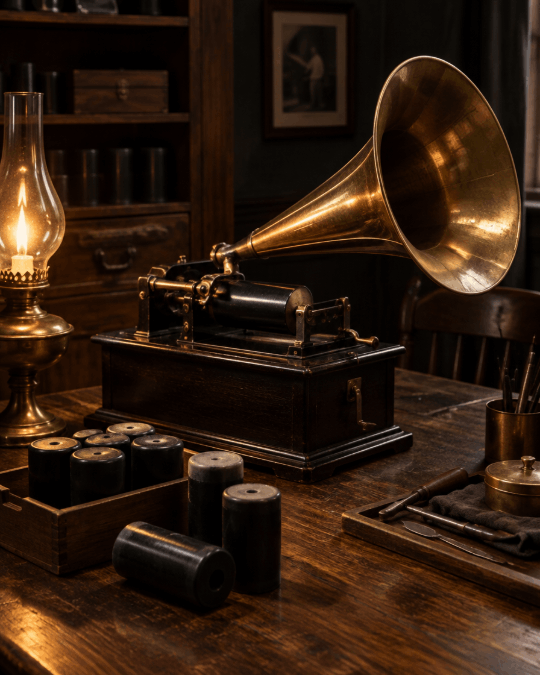
The house’s atelier has extended its craft to sound. At the close of August it composed its first original pieces, Terroirs EP1, Lac Bleu, then Danse en huit, written to accompany the moving images the Cabinet is preparing.
The intent is the same as everywhere else in the house: nothing borrowed, nothing generic. The images will carry their own music, made for them, as the plates carry their own captions.
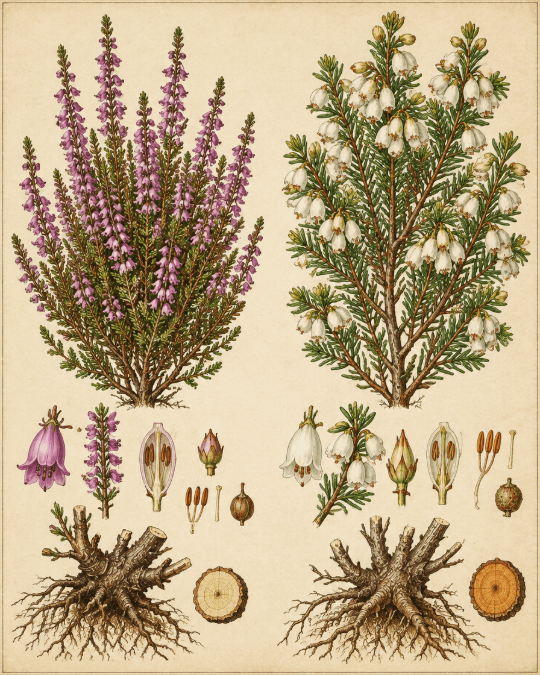
Calluna vulgaris, the ling, flowers when the year turns: August into September, the last great honey flow of the moors. Its honey is thixotropic, a jelly at rest that liquefies when stirred, so rich in proteins that it must be pressed or loosened needle by needle before it will leave the comb.
Erica arborea, the tree heather, is its opposite in almost everything: a spring bloom, an amber honey that flows freely, and a rootstock so hard it became pipe briar. Two Ericaceae, one moorland, and between them the whole span of a beekeeping year.
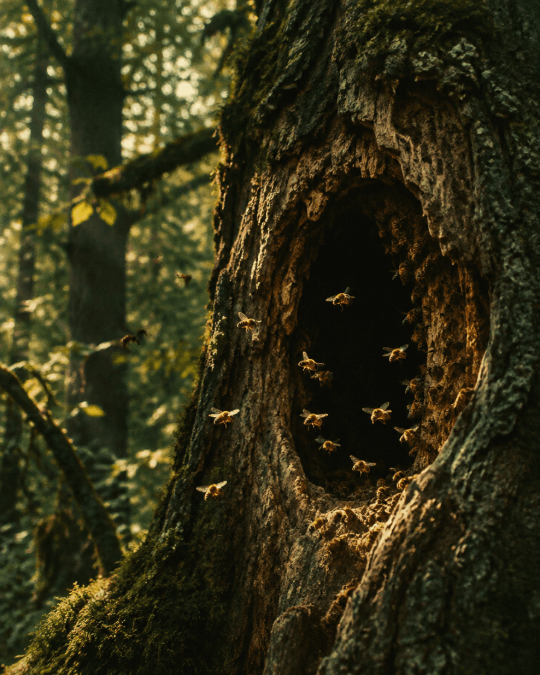
Final episode of the varroa serial. After Gotland and its untreated colonies came a broader question: what conditions allow a colony to live with the mite at all? Thomas Seeley, who spent a career studying wild colonies in the forests around Ithaca, drew one answer from them: smaller nests, wider spacing, frequent swarming, the very habits of the wild.
This approach is sometimes called Darwinian beekeeping: not abandoning the hive, but returning to the colony some of the circumstances under which it evolved. The serial closes here, where it began, in the forest.
Names two things at once: the flow of nectar that the flowers yield, and the span of days during which it flows. Nineteenth-century apicultural manuals fixed the usage; beekeepers still speak of the miellée de callune as one speaks of a harvest and of a season in a single word. A language that gives one word to the event and to its duration says something exact about beekeeping: the honey flow is not an act, it is a time.
 The Honey Factories